The Smart Upgrade: Cost and Benefits of Adding Attic Insulation to a Sixty-Year-Old House

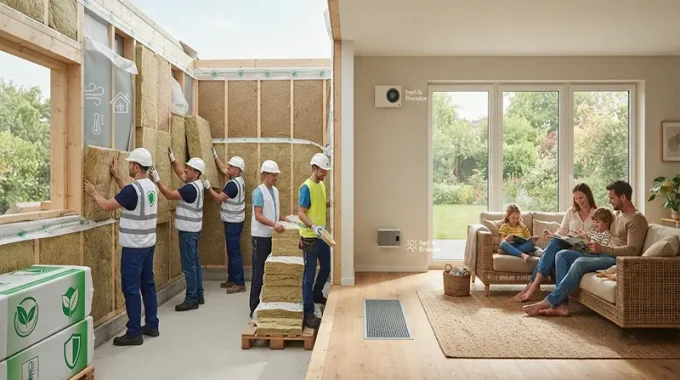
If you own a sixty-year-old house, chances are its attic insulation is either insufficient, settled, or non-existent by modern standards. Since the attic is the single greatest point of heat loss and gain in a home, upgrading the insulation is one of the most effective and financially rewarding home improvements you can undertake.

The typical attic in an older home may have a minimal R-value (resistance to heat flow). Current building codes, depending on your climate zone, recommend levels ranging from R-38 to R-60. Bringing your vintage home up to this standard offers immediate benefits that outweigh the initial cost and complexity.

The Cost: An Investment with a High ROI

The total cost of adding attic insulation depends on the size of your attic, the material chosen, and the existing level of insulation. The most common and cost-effective method for older, existing attics is blown-in insulation (cellulose or …

The Green Hot Water Face-Off: Reviews of ENERGY STAR Certified Heat Pump Water Heaters vs. Tankless

When upgrading to a high-efficiency water heater, homeowners often face a choice between two powerhouse technologies: the ENERGY STAR certified heat pump water heater (HPWH) and the tankless (or on-demand) water heater. Both offer significant energy savings compared to traditional electric tanks, but they achieve their efficiency in fundamentally different ways, leading to distinct performance reviews and suitability for different homes.

Efficiency: The HPWH Advantage

The most consistent finding in reviews is the superior energy efficiency of the heat pump model.

  • Heat Pump Water Heaters (HPWH): These units function like a reverse refrigerator, pulling heat from the surrounding air (even in a basement or garage) and transferring it to the water in the storage tank. Because they move heat rather than generate it, they are incredibly efficient—often reviewed as being two to three times more efficient than conventional electric resistance heaters.
    • Uniform Energy Factor (UEF) Score: HPWHs typically boast

Save Water, Grow Green: A DIY Guide to Installing a Grey Water Recycling System for Garden Irrigation

In an era of increasing water scarcity, recycling water is not just an eco-conscious choice—it’s a practical necessity. A DIY grey water recycling system for garden irrigation is one of the easiest and most effective home projects for water conservation. Grey water is the gently used wastewater from your showers, bathtubs, and washing machines. When properly diverted, this water can keep your garden flourishing while significantly cutting down on your freshwater usage.

This guide focuses on the simplest and most popular system for beginners: the Laundry-to-Landscape (L2L) System, which uses gravity and your washing machine’s pump to irrigate.

Phase 1: Planning and Legal Compliance

Before you cut a single pipe, proper planning is essential for safety, efficiency, and legality.

1. Know Your Source

The best grey water sources are those with the fewest contaminants:

  • Washing Machine (Laundry-to-Landscape): The easiest to tap into, as the hose is readily accessible.
  • Showers

The Pure Palette: The Best Low-VOC, Non-Toxic Interior Paint for Baby Nurseries

Creating a nursery is one of the most exciting parts of preparing for a new baby, but for health-conscious parents, the process comes with a vital consideration: indoor air quality. Traditional paints can release Volatile Organic Compounds (VOCs)—toxic chemicals that continue to “off-gas” long after the paint is dry, posing a risk to a newborn’s developing respiratory system.

The solution is to choose low-VOC non-toxic interior paint designed specifically for sensitive environments. This guide breaks down what to look for and highlights some of the best brands on the market, ensuring your baby’s first room is as safe as it is beautiful.

Understanding the Non-Toxic Difference

When shopping for nursery paint, don’t stop at “Low-VOC.” You should aim for “Zero-VOC” and check for additional safety certifications.

  • VOCs (Volatile Organic Compounds): These are the chemicals responsible for the strong, distinct smell of drying paint. Zero-VOC paints contain less than 5

The Next Leap: Latest Breakthroughs in Solid-State Battery Technology for Electric Vehicles

The future of electric vehicles (EVs) hinges on battery technology, and the race to commercialize solid-state battery technology for electric vehicles is reaching a fever pitch. Replacing the flammable liquid electrolyte in current lithium-ion (Li-ion) batteries with a solid material promises to solve the most pressing challenges facing EV adoption: range anxiety, charging time, and safety. Recent breakthroughs are quickly moving this once-theoretical technology from the laboratory into pilot production lines.

Energy Density and Range Revolution

The single greatest breakthrough lies in energy density. Solid electrolytes are non-flammable and allow for the use of a pure lithium metal anode, which has a far higher energy capacity than the graphite used in Li-ion cells.

  • Record-Setting Prototypes: Companies are demonstrating tangible results. Prototypes like the one tested by Mercedes, equipped with a Factorial Energy battery, have achieved real-world ranges of nearly 750 miles (1,200 km) on a single charge. This demonstrates