
In an era of increasing water scarcity, recycling water is not just an eco-conscious choice—it’s a practical necessity. A DIY grey water recycling system for garden irrigation is one of the easiest and most effective home projects for water conservation. Grey water is the gently used wastewater from your showers, bathtubs, and washing machines. When properly diverted, this water can keep your garden flourishing while significantly cutting down on your freshwater usage.
This guide focuses on the simplest and most popular system for beginners: the Laundry-to-Landscape (L2L) System, which uses gravity and your washing machine’s pump to irrigate.
Phase 1: Planning and Legal Compliance
Before you cut a single pipe, proper planning is essential for safety, efficiency, and legality.
1. Know Your Source
The best grey water sources are those with the fewest contaminants:
- Washing Machine (Laundry-to-Landscape): The easiest to tap into, as the hose is readily accessible.
- Showers and Bathtubs: High volume, but plumbing modifications are more complex.
- AVOID: Kitchen sinks and dishwashers (too much grease and food solids) and, of course, toilets (blackwater).
2. Check Local Regulations (CRITICAL)
Grey water use is regulated differently across various regions.
- What to Check: You must determine if your local authority requires a permit, restricts the type of system (e.g., subsurface only), or limits the water source.
- Key Safety Rule: Grey water must never be allowed to pool, run off your property, or be used on edible root vegetables or leafy greens that are eaten raw.
3. Use Plant-Friendly Products
Since the water goes directly into your soil, switch to biodegradable, non-toxic detergents and soaps that are low in sodium (salt) and boron. These chemicals can damage plants and soil structure over time.
Phase 2: Materials and Installation Steps
The L2L system uses minimal components and relies on gravity flow to the garden.
Components Checklist:
- 3-Way Diverter Valve (Brass or PVC): The core component that switches flow between your sewer/septic and your grey water system.
- PVC or ABS Pipe: To route water from the diverter valve to the outside (typically 1-inch or 1.5-inch diameter).
- HDPE (High-Density Polyethylene) Tubing: Flexible black tubing for the landscape distribution lines.
- Barbed Fittings (Tees/Elbows): To split the flow to different irrigation points.
- Mulch Basins: Coarse, woody mulch for the end points of the irrigation lines.
- Tools: PVC cement, primer, pipe cutter, shovel.
Step-by-Step Installation:
- Install the Diverter Valve: Locate the washing machine’s drain standpipe. Cut into the drain line and install the 3-way valve, routing one port back to the original drain line (sewer/septic) and the second port (the new path) to the outside.
- Route the Pipe: Run the PVC or ABS pipe from the diverter valve through the nearest exterior wall. The line must maintain a continuous, slight downward slope (gravity is your engine!). Avoid sharp 90-degree turns; use two 45-degree fittings for gentler curves to prevent clogs.
- Connect to Distribution: Outside, connect the rigid pipe to the flexible HDPE tubing using appropriate fittings.
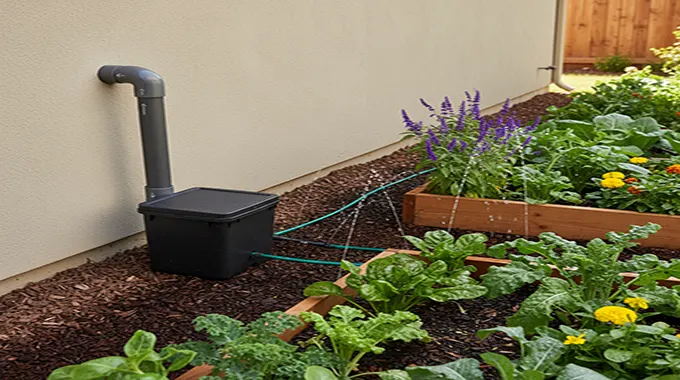
- Create Mulch Basins: Dig small, shallow trenches or basins (roughly 12-18 inches deep and wide) around the plants you wish to water, such as established trees, shrubs, or ornamental garden beds.
- Set the Outlets: Run the HDPE tubing into these mulch basins. The end of the pipe should sit low in the basin. Fill the basins with 6-8 inches of coarse, woody mulch. The water will flow into the basin and slowly filter through the mulch into the plant’s root zone, preventing pooling.
- Test the Flow: Run a short washing machine cycle and check the system. Ensure water is flowing evenly to all outlets and that there is no pooling or runoff at the discharge points.
Phase 3: Maintenance and Responsible Use
- Subsurface Irrigation: The L2L system is generally subsurface (discharging under the mulch) to prevent human or pet contact and minimize odor.
- Avoid Storage: Untreated grey water should not be stored for more than 24 hours as bacteria will grow rapidly, causing the water to turn septic and smell. The L2L system is designed for immediate use.
- Regular Check-Ups: Periodically check your diverter valve, pipe connections, and mulch basins for clogs (usually lint or hair). Top up the mulch as needed.
By installing a DIY grey water recycling system, you not only reduce your water bill but also nourish your garden with a dependable, sustainable water source.