
The built environment is responsible for nearly 40 percent of global carbon emissions. For decades, the architectural and construction industries focused heavily on operational carbon—optimizing HVAC efficiencies and lighting to reduce energy consumption once a building is occupied. However, as international climate targets tighten and green building standards evolve, a stark reality has emerged: operational efficiency alone is no longer enough.
The industry must confront embodied carbon—the greenhouse gas emissions associated with material extraction, manufacturing, transportation, and construction. To achieve true net-zero targets, modern architecture is undergoing a foundational material revolution. Integrating low carbon recycled materials in green building products for construction is no longer an experimental niche; it is the definitive path forward for sustainable design, regulatory compliance, and structural resilience.
The Embodied Carbon Challenge in Modern Construction
To understand why material selection is the new frontier of sustainable architecture, we must look at the lifecycle of a building. Embodied carbon represents the upfront emissions released before a single tenant even walks through the door. Traditional structural materials like virgin steel, standard Portland cement, and petroleum-based insulation require staggering amounts of thermal and chemical energy to produce.
Because these emissions happen upfront, they lock a building into a heavy carbon footprint from day one. As global building codes shift to penalize high-carbon developments and reward circular design, developers, architects, and general contractors are actively seeking verified low-carbon alternatives that maintain uncompromising structural integrity.
Core Low-Carbon Recycled Building Materials & Products
Innovations in materials science and circular manufacturing have introduced a new class of high-performance green building products. Several material categories are leading the transformation:
1. Recycled Aggregate Concrete and Low-Carbon Binders
Cement production alone accounts for roughly 8 percent of global carbon dioxide emissions. Modern green concrete products combat this by substituting traditional Portland cement with Supplementary Cementitious Materials (SCMs)—such as industrial fly ash, blast furnace slag, or recycled glass pozzolans. Furthermore, utilizing crushed concrete rubble as recycled coarse aggregate significantly reduces virgin quarry mining while locking down local waste streams.
2. Recycled Structural Steel and Aluminum
Steel is infinitely recyclable, yet producing virgin steel from iron ore remains energy-intensive. By utilizing electric arc furnaces (EAF) powered by renewable energy to melt scrap steel, manufacturers produce structural steel with a fraction of the embodied carbon. Similarly, recycled aluminum framing systems conserve up to 95 percent of the energy required for primary extraction, providing high-strength, lightweight solutions for modern facades.
3. Bio-Based and Recycled Insulation Composites
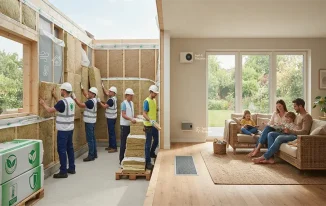
Traditional foam insulation relies heavily on blowing agents with high global warming potentials and petrochemical inputs. Next-generation insulation products utilize cellulose, recycled denim batting, and agricultural waste fibers. These materials not only deliver exceptional thermal and acoustic performance but frequently act as net-carbon-negative sinks, sequestering carbon within the building envelope.
4. Reclaimed Timber and Engineered Wood Composites
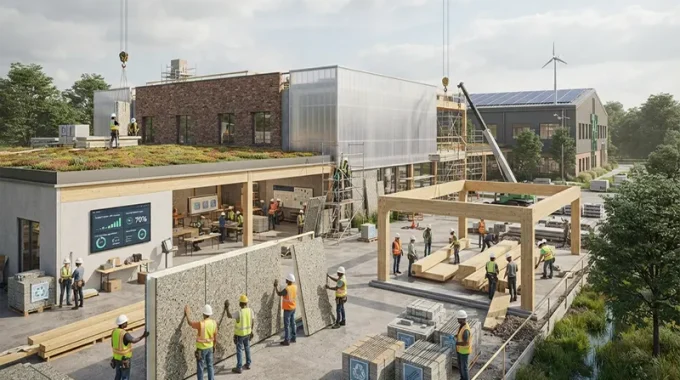
Reclaiming structural lumber from decommissioned industrial buildings diverts massive volumes of wood from landfills while preserving ancient, old-growth forests. When combined with certified fast-growing engineered wood products, reclaimed timber brings warmth, structural reliability, and verifiable carbon storage into commercial and residential construction.
Key Benefits for Developers, Architects, and General Contractors
Adopting low-carbon recycled building products delivers substantial strategic, economic, and operational rewards across the project lifecycle:
- Regulatory Compliance and Certification Credits: Using high-recycled-content materials and transparent Environmental Product Declarations (EPDs) is critical for securing maximum points under advanced green building rating systems, such as LEED v5, BREEAM, and WELL standards.
- Lifecycle Cost Efficiency and Durability: Modern recycled building products undergo rigorous engineering testing to ensure they match or exceed the performance benchmarks of conventional materials, safeguarding long-term asset value.
- Corporate ESG Leadership and Market Value: Institutional investors and corporate tenants increasingly prioritize green-certified real estate portfolios, driving higher asset valuations and tenant retention rates.
Implementation and Sourcing Challenges
While the benefits are clear, widespread adoption requires careful navigation of practical hurdles. Project teams must carefully source regionally to minimize transportation emissions, verify verified EPDs to avoid greenwashing, and work closely with structural engineers to ensure local building code approvals for emerging recycled composite materials.
Low-carbon recycled materials in green building products represent the cornerstone of regenerative architecture. By shifting from a linear “extract-make-dispose” model to a circular, low-carbon framework, the construction industry can drastically slash its embodied carbon footprint. Investing in these innovative materials is more than a compliance strategy—it is a vital commitment to building a durable, resilient, and sustainable built environment for generations to come.