
Commercial real estate (CRE) is facing mounting pressure from institutional investors, corporate tenants, and tightening global climate regulations. With the introduction of modern green building frameworks like LEED v5, sustainability is no longer measured by checklist compliance or isolated point accumulation. Instead, the rating system has evolved into an impact-driven framework centered squarely on decarbonization, climate resilience, and human health [00:51].
For commercial real estate developers and asset managers, specifying LEED-certified green building products for commercial real estate development is no longer just an optional differentiator. It is a core financial and operational driver required to future-proof assets, mitigate regulatory risk, and command premium valuations in an increasingly carbon-conscious market.
The Evolving Regulatory and Market Pressures in CRE
To understand why material selection dictates modern commercial success, one must examine the shifting financial landscape of real estate. Traditional commercial construction methods carry hidden long-term liabilities. Buildings constructed with high-carbon structural systems, non-transparent materials, and standard petroleum-based finishes face severe risks of asset devaluation, carbon taxes, and mandatory retrofitting under tightening municipal energy codes.
Furthermore, corporate tenants are under intense pressure to hit their own Scope 3 emissions targets. They actively seek out commercial spaces that align with their ESG (Environmental, Social, and Governance) commitments. Developers who fail to integrate high-performance, certified green products risk high vacancy rates and diminished long-term liquidity.
Core LEED-Certified Product Categories Transforming Commercial Assets
Under updated green building standards, material specifications are directly tied to whole-building performance, embodied carbon reduction, and indoor environmental quality. Several key product categories are driving commercial real estate transformation:
1. Low-Carbon Structural Systems and SCMs
Structure accounts for a massive share of a building’s upfront embodied carbon. Developers are increasingly specifying structural steel produced via electric arc furnaces powered by renewable energy, alongside concrete mixes utilizing Supplementary Cementitious Materials (SCMs) like slag and fly ash. These certified products drastically reduce upfront carbon intensity without compromising structural engineering specifications.
2. High-Performance Envelope and Insulation Products
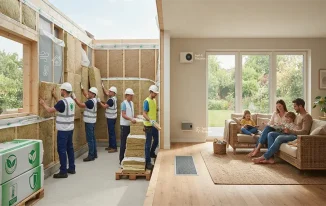
Operational energy efficiency begins with the thermal envelope. Continuous insulation products—such as high-density mineral wool and advanced thermal-break window assemblies—minimize thermal bridging and reduce heating and cooling loads over a building’s operational lifecycle.
3. Low-Emitting Interior Finishes and Transparency
Health and well-being are central pillars of modern commercial design. Specifying low-emitting paints, adhesives, flooring, and composite wood products that meet strict volatile organic compound (VOC) limits ensures pristine indoor air quality. Moreover, products backed by transparent Environmental Product Declarations (EPDs) provide verified data on lifecycle impacts, directly satisfying material transparency credits.
The Commercial ROI of Green Building Product Specification
Integrating certified green building products into commercial developments yields undeniable financial and strategic returns:
- Asset Valuation and Premium Rents: Certified high-performance buildings consistently command higher lease rates, achieve lower capitalization rates, and experience shorter vacancy periods compared to conventional properties.
- Future-Proofing Against Decarbonization Mandates: By reducing both embodied carbon and projected operational carbon over multi-decade timelines, developers shield their portfolios from emerging carbon penalties and strict energy performance standards.
- Access to Preferential Capital: Institutional investors and lenders favor sustainable assets, frequently unlocking green financing terms, lower interest rates, and accelerated capital deployment for LEED-certified projects.
Procurement and Supply Chain Execution Hurdles
While the financial and environmental benefits are clear, executing a green material strategy requires rigorous supply chain oversight. Project teams must coordinate early during pre-design phases to source regionally, verify multi-attribute certifications, and ensure general contractors adhere to strict sustainable purchasing policies.
LEED-certified green building products represent the foundation of modern commercial real estate development. By aligning material procurement with rigorous decarbonization, resilience, and health benchmarks, developers can transform real estate assets from carbon liabilities into high-performing, resilient, and profitable portfolios.