
Modern enterprises face an unprecedented wave of accountability. Driven by tightening regulatory mandates—such as SEC climate disclosure rules, the European Union’s Corporate Sustainability Reporting Directive (CSRD), and global net-zero commitments—boardrooms are no longer treating environmental, social, and governance (ESG) goals as mere corporate philanthropy. Sustainability has become a core operational requirement.
However, meeting these strict reporting frameworks through manual data collection, spreadsheets, and legacy accounting systems is no longer viable. To achieve audit-ready compliance and verifiable emissions reductions, organizations must modernize their infrastructure. Deploying advanced commercial green technology products for corporate sustainability compliance transforms environmental governance from a burdensome administrative hurdle into a strategic competitive advantage.
The Regulatory Landscape: Why Compliance is Driving Tech Adoption
The era of greenwashing and vague corporate pledges has officially ended. Regulators, investors, and consumers now demand granular, verifiable data across entire corporate value chains.
Calculating Scope 1 (direct emissions), Scope 2 (indirect energy emissions), and Scope 3 (supply chain emissions) requires immense data processing power. Traditional auditing methods are prone to human error, lack real-time visibility, and fail to meet the rigorous auditability standards demanded by modern financial regulators. As carbon pricing, heavy penalties for non-compliance, and mandatory disclosure frameworks take full effect, enterprises are turning to automated, tech-driven solutions to maintain compliance and protect their market valuation.
Top Commercial Green Technology Categories for Enterprise Compliance
To streamline ESG reporting and dramatically reduce operational footprints, forward-thinking organizations are investing in four critical categories of commercial green technology:
1. Automated Carbon Accounting and ESG Software Platforms
Enterprise-grade software solutions (such as Persefoni, Watershed, or Salesforce Net Zero Cloud) serve as the digital backbone of corporate compliance. These platforms integrate directly into existing enterprise resource planning (ERP) systems to automatically ingest utility bills, travel data, and supply chain inputs. By translating raw operational data into standardized, audit-ready carbon accounts aligned with the Greenhouse Gas Protocol and ISSB standards, these tools eliminate guesswork and ensure reporting accuracy.
2. IoT Energy Management and AI-Driven Smart HVAC Systems
Commercial real estate remains one of the largest contributors to corporate carbon footprints. Next-generation building automation systems utilize Internet of Things (IoT) sensors and artificial intelligence to monitor occupancy patterns, adjust climate controls dynamically, and execute automated peak load shifting. These systems slash commercial utility consumption while providing verifiable data streams for Scope 2 emissions reporting.
3. Commercial Renewable Energy Arrays and Microgrid Storage
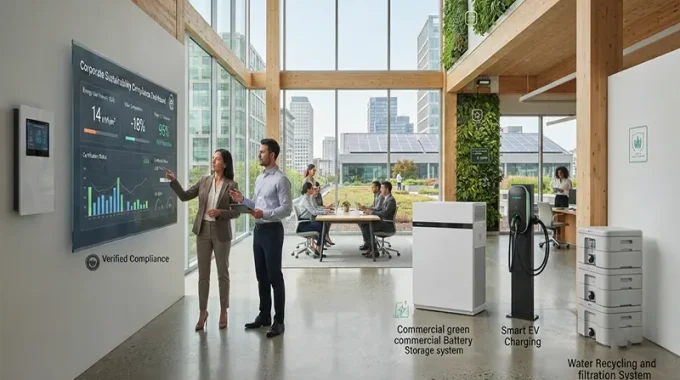
Transitioning to clean energy is vital for hitting corporate emission targets, but purchasing unverified carbon offsets is facing mounting regulatory scrutiny. On-site commercial solar installations coupled with enterprise battery energy storage systems (BESS) allow companies to generate, store, and consume certified green energy directly. This hardware not only ensures operational resilience against grid failures but also provides direct, unassailable proof of renewable energy generation for ESG audits.
4. Circular Supply Chain and Asset Tracking Technology
For many enterprises, over 80% of their total emissions reside in Scope 3 supply chains. Blockchain and IoT-enabled asset tracking technologies allow organizations to monitor material lifecycles, verify recycled content sourcing, and track waste diversion rates across third-party suppliers, ensuring total transparency throughout the manufacturing and distribution ecosystem.
Strategic Business Benefits Beyond Compliance
While avoiding regulatory fines and legal penalties is a primary motivator, investing in commercial green technology delivers compounding financial and strategic rewards:
- Significant Cost Reductions: Automated energy management, optimized HVAC scheduling, and streamlined resource consumption directly lower corporate utility overhead and operational expenditures.
- Enhanced Brand Equity and Investor Appeal: Institutional investors increasingly tie capital allocation to robust ESG scores. Transparent, tech-backed compliance attracts sustainable investment and strengthens corporate reputation.
- Talent Attraction and Retention: Modern professionals—particularly younger demographics—prefer working for purposeful, environmentally responsible organizations, giving tech-forward companies an edge in talent acquisition.
Key Selection Criteria for Enterprise Tech Buyers
When evaluating commercial green technology solutions, enterprise procurement teams must prioritize specific integration parameters:
- ERP Interoperability: Software and hardware must integrate smoothly with legacy enterprise architectures (such as SAP, Oracle, or Microsoft Dynamics) to prevent data silos.
- Scalability and Security: Solutions must feature robust cloud security infrastructure and the capacity to scale seamlessly as corporate footprints expand globally.
- Regulatory Agility: Platforms must be agile enough to adapt automatically as international reporting standards and compliance frameworks evolve.
Corporate sustainability compliance is no longer a peripheral corporate initiative; it is a foundational pillar of modern enterprise survival. By deploying sophisticated commercial green technology products—ranging from automated carbon accounting software to IoT-driven energy management systems—organizations can streamline regulatory reporting, slash overhead costs, and future-proof their operations. Embracing green tech turns compliance from an operational chore into a powerful driver of long-term corporate resilience and value creation.