
Modern industrial operations generate complex streams of toxic, persistent, and contaminated byproducts that traditional waste management techniques struggle to handle safely. For decades, industries have relied on conventional disposal methods—such as high-temperature incineration or secure hazardous landfilling—to manage these dangerous materials. However, as environmental regulations tighten and the global push toward a circular economy accelerates, these legacy practices are increasingly recognized as unsustainable liabilities.
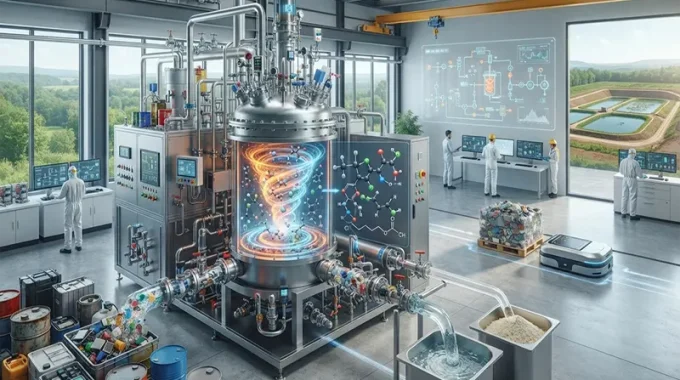
Enter the next frontier of industrial environmental engineering: advanced chemical recycling processes in hazardous waste management technology. By breaking complex molecular bonds down to their foundational building blocks, these innovative chemical technologies transform hazardous liabilities into safe, recoverable resources, redefining how industries handle toxic waste.
The Limitations of Legacy Hazardous Waste Treatment
To understand the urgent need for advanced chemical recycling, one must examine the fundamental flaws of legacy hazardous waste treatment. Traditional incineration, while effective at reducing waste volume, often generates secondary air pollutants, requires massive energy inputs, and releases carbon emissions. Meanwhile, secure hazardous landfilling does not actually destroy waste; it simply buries toxic chemicals, persistent organic pollutants (POPs), and heavy metals, passing massive long-term environmental liability and monitoring costs onto future generations.
As regulatory bodies worldwide enforce stricter zero-waste mandates and heavily penalize toxic containment, industrial manufacturers are actively seeking closed-loop alternatives that permanently neutralize hazards while reclaiming valuable feedstocks.
Core Advanced Chemical Recycling Technologies
Advanced chemical recycling utilizes thermal, physical, and catalytic reactions to alter the molecular structure of hazardous waste streams. Several leading-edge processes are transforming the sector:
1. Pyrolysis and Gasification
Pyrolysis involves the thermal decomposition of hazardous organic streams—such as contaminated engineering plastics, electronic waste, and oily sludges—in an oxygen-deprived environment. By avoiding combustion, pyrolysis prevents the formation of toxic dioxins and furans, instead breaking polymers down into high-value pyrolysis oil, recovered carbon black, and synthetic gas (syngas). Gasification takes this a step further by operating at higher temperatures with controlled oxygen or steam, converting complex hazardous waste into clean hydrogen and carbon monoxide feedstocks for chemical manufacturing.
2. Solvent-Based Dissolution and Extraction
For complex industrial matrices containing valuable polymers or targeted contaminants, solvent-based purification offers a selective, low-temperature solution. This process uses specialized solvents to selectively dissolve target materials while leaving hazardous additives, heavy metals, or impurities behind. The purified polymer or chemical is then recovered via precipitation, allowing industries to loop high-purity materials back into production without thermal degradation.
3. Supercritical Water Oxidation (SCWO)
Supercritical Water Oxidation represents a pinnacle of destruction technology for aqueous hazardous waste, persistent pharmaceutical residues, and chemical warfare agents. Operating at temperatures and pressures above water’s thermodynamic critical point (374°C and 22.1 MPa), SCWO transforms water into a fluid with unique solvent properties that completely dissolve organic compounds and oxidizers. The result is a rapid, highly efficient destruction process that breaks down toxic structures into harmless carbon dioxide, water, and inorganic salts with near-100% destruction efficiency.
Key Industrial Benefits and Economic Drivers
Integrating advanced chemical recycling into hazardous waste management yields powerful operational, environmental, and financial advantages:
- Closed-Loop Resource Recovery: Instead of destroying matter, chemical recycling captures the intrinsic value stored within waste streams, converting toxic byproducts into reusable chemical feedstocks, industrial fuels, and purified base materials.
- Regulatory Compliance and Risk Mitigation: Advanced chemical technologies permanently destroy toxins rather than containing them, effectively eliminating the perpetual legal liability and financial risks associated with hazardous landfill containment.
- Optimized Energy Efficiency: Many chemical recycling reactors capture and reuse the thermal energy generated during operation, significantly reducing the net energy footprint compared to conventional incineration.
Implementation Challenges and Safety Protocols
Despite their transformative potential, deploying advanced chemical recycling systems presents distinct engineering hurdles. Facilities must navigate high capital expenditures (CapEx), manage variable waste feedstocks that require sophisticated pretreatment, and utilize specialized reactor metallurgy capable of withstanding corrosive acids and extreme temperatures. Furthermore, stringent secondary emission containment and automated safety shut-off systems are mandatory to ensure worker safety and prevent fugitive emissions during processing.
Advanced chemical recycling processes represent a paradigm shift in hazardous waste management technology. By moving away from burial and combustion and embracing molecular-level transformation, industrial enterprises can neutralize toxic hazards while recovering valuable resources. Investing in these innovative chemical pathways is no longer just an environmental compliance measure—it is a cornerstone of resilient, sustainable, and future-proof industrial operations.