
When we think about sustainable living, our minds often jump to energy-efficient appliances, reusable packaging, or solar panels. Yet, one of the largest and most impactful items in our homes—the living room sofa—is frequently overlooked. The fast-furniture industry relies heavily on resource-intensive manufacturing, clear-cut virgin timber, and petroleum-based synthetic textiles that contribute to massive landfill waste.
Fortunately, a design revolution is underway. Modern eco-conscious craftsmanship has proven that you do not have to sacrifice luxury, comfort, or style to protect the planet. Investing in an eco-friendly sofa made from recycled fabrics and sustainable wood transforms your living space into a statement of environmental stewardship, merging circular economy principles with timeless interior aesthetics.
The Hidden Footprint of Conventional Furniture
To truly appreciate the value of sustainable furniture, it helps to understand the environmental toll of conventional manufacturing. Traditional couches are often built using cheap particleboard derived from clear-cut old-growth forests, paired with synthetic fabrics like virgin polyester or nylon that require massive amounts of crude oil and water to produce.
To make matters worse, these materials are frequently treated with toxic chemical flame retardants and stain repellents that off-gas volatile organic compounds (VOCs) into your living space. When these couches wear out—as cheap construction inevitably does—they end up in landfills, where synthetic foams and treated woods take centuries to break down, leaching microplastics and chemicals into the earth.
Anatomy of a Truly Sustainable Sofa
A genuinely sustainable couch is a triumph of circular engineering, built from two primary pillars that rethink how raw materials are sourced and utilized:
1. Recycled Fabrics: Giving Waste a Second Life
Textile waste is one of the fastest-growing environmental crises in the world. Eco-friendly sofas combat this by utilizing innovative recycled textiles:
- Post-Consumer Recycled Polyester: High-performance upholstery is frequently woven from yarn spun from recycled plastic bottles, diverting plastic waste from oceans and landfills while requiring significantly less energy to produce than virgin polyester.
- Recycled Cotton and Wool Blends: Salvaged textile scraps are mechanically broken down and re-spun into soft, durable yarn, preserving natural fibers and drastically reducing the need for intensive cotton farming and chemical dyeing processes.
2. Sustainable Wood: Preserving Forests and Strength
The skeleton of your sofa dictates its longevity. Sustainable couches replace vulnerable particleboard and uncertified timber with eco-friendly alternatives:
- FSC-Certified Timber: Wood sourced from forests managed according to strict environmental, social, and economic standards, ensuring that harvested trees are replanted and local wildlife habitats are protected.
- Reclaimed Wood: Salvaged from old barns, factories, or shipping pallets, reclaimed wood gives historic timber a stunning second act while ensuring zero new deforestation occurs for your furniture.
Key Benefits Beyond the Environment
Choosing a sofa crafted from recycled materials and sustainable wood offers profound practical advantages that elevate your everyday living experience.
- Exceptional Durability: High-performance recycled fabrics are engineered to withstand heavy everyday use, making them naturally more stain-resistant, colorfast, and durable than cheap virgin synthetics. Combined with solid, kiln-dried sustainable wood frames and mortise-and-tenon joinery, these sofas are built to last for decades rather than years.
- Healthier Indoor Air Quality: By avoiding formaldehyde glues, toxic chemical treatments, and synthetic off-gassing plastics, sustainable sofas provide a cleaner, healthier breathing environment—crucial for families, children, and anyone with chemical sensitivities or allergies.
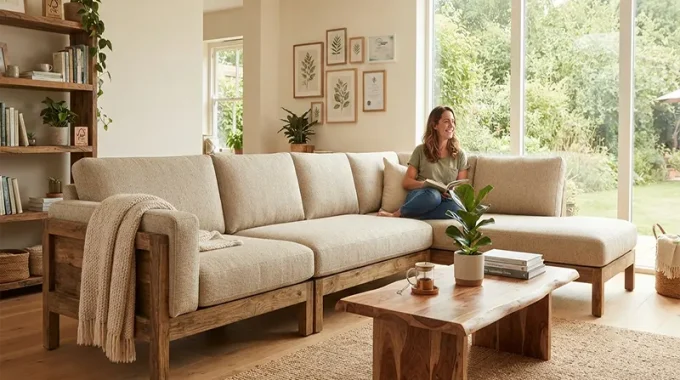
- Timeless, Unique Aesthetics: Reclaimed wood brings rich grain patterns, history, and warmth to a room, while textured recycled weaves add depth and modern elegance. These pieces do not look “rustic” by default; they range from sleek mid-century modern silhouettes to plush, minimalist marvels.
What to Look for When Shopping (Buying Guide)
Navigating the sustainable furniture market requires a discerning eye to avoid greenwashing. Keep these guidelines in mind when evaluating your options:
- Verify Certifications: Look for trusted third-party standards such as the Global Recycled Standard (GRS) for fabric content, FSC (Forest Stewardship Council) certification for wood, and OEKO-TEX for chemical safety.
- Inspect the Frame Joinery: Ask manufacturers how the frame is put together. Look for corner-blocked frames, dowels, or interlocking wood joinery rather than staples and glue alone.
- Inquire About Cushion Fills: A truly eco-friendly sofa pairs its recycled exterior with safe interior cushioning, such as GOLS-certified organic latex or natural wool, avoiding standard polyurethane foam whenever possible.
Your living room is the heart of your home—a place where comfort meets connection. Choosing an eco-friendly sofa made from recycled fabrics and sustainable wood allows you to curate a space that reflects your deepest values without compromising on elegance or coziness. By supporting circular design and responsible forestry, your furniture choice becomes a powerful vote for a cleaner, greener, and more sustainable future.