
The craft brewing boom has brought intense scrutiny to the industry’s massive water footprint. For every gallon of beer, breweries generate between three to ten gallons of high-strength wastewater loaded with sugars, yeast, and cleaning chemicals. Discharging this untreated can lead to hefty municipal surcharges and environmental strain.
Sustainability in this sector is now driven by technologies that don’t just clean water but also recover resources and energy. The most reviewed and favored solutions for breweries typically involve anaerobic processes, advanced biological reactors, and resource recovery systems.
Anaerobic Digestion (AD): The Energy MVP
Anaerobic digestion is consistently highlighted as the most cost-effective and sustainable pretreatment method for high-strength brewery effluent. It involves using microorganisms to break down organic matter in the absence of oxygen.
- Review Highlights: The primary benefit cited by operators is biogas production (mostly methane). This biogas is a renewable energy source that can be used to fuel the brewery’s boiler, significantly reducing natural gas costs and cutting the facility’s carbon footprint.This energy recovery makes the system a positive contributor to the circular economy.
- Best-in-Class Models: Technologies like the Up-flow Anaerobic Sludge Blanket (UASB) reactor are popular for their compact footprint and high organic removal efficiency (often $80\%$ of Chemical Oxygen Demand, or COD).
- The Drawback: AD alone is usually a pre-treatment. It is excellent at removing organics and generating energy, but its effluent typically requires a subsequent aerobic or membrane process to meet strict municipal or discharge standards for nutrients like nitrogen and phosphorus.
Membrane Bioreactors (MBR): Purity and Reuse
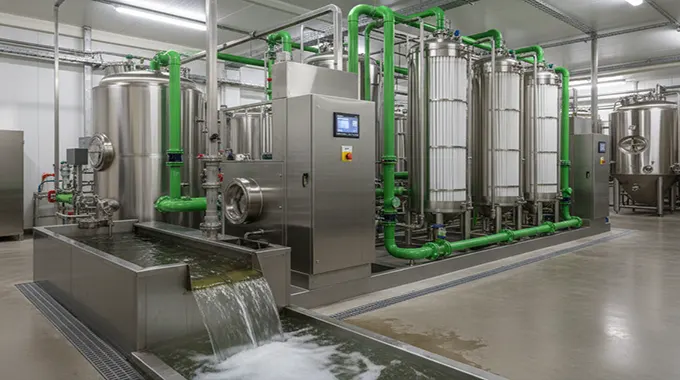
Membrane Bioreactors combine biological treatment (like activated sludge) with ultra-fine membrane filtration.
- Review Highlights: MBR systems deliver exceptionally high-quality effluent that is often clean enough for non-potable water reuse applications within the brewery, such as washing floors, bottle rinsing, or in cooling towers. This ability to close the water loop is a huge sustainability win.
- Performance: MBRs offer reliable, stable effluent quality and high removal rates for both organic pollutants and suspended solids.
- The Drawback: Reviews often point out the higher initial capital cost and potential for membrane fouling, which requires vigilant monitoring and maintenance, adding to operating expenses.
Emerging Technologies: Microalgae and BioElectrochemical Systems
New, highly sustainable options are gaining attention, particularly for smaller craft breweries or specific high-strength streams:
- Microalgae Treatment: This method uses algae to absorb nutrients (nitrogen and phosphorus) and organic load while releasing oxygen, which can be utilized by aerobic bacteria. It has low capital and energy costs and produces a useful algal biomass byproduct. However, it requires a larger footprint and can be sensitive to rapid changes in effluent load.
- Microbial Fuel Cells (MFCs) / BioElectrochemical Treatment: Systems like Aquacycl’s BioElectrochemical Treatment Technology (BETT®) are proving effective for ultra-high-strength waste streams. These anaerobic systems generate DC power and produce minimal sludge, drastically cutting down on sludge removal costs—a major operational headache for breweries.
The shift toward sustainable brewery wastewater treatment is clear: technologies that prioritize resource recovery (biogas, clean water) over simple pollutant removal offer the best long-term environmental and financial benefits. The optimal choice usually involves a hybrid system, often pairing energy-recovering AD with a high-purity polishing step like MBR.