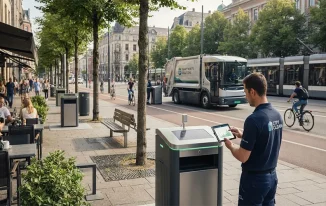

Modern municipalities, agricultural enterprises, and industrial food processors generate staggering volumes of organic waste daily. From food scraps and commercial agricultural residues to municipal sewage sludge, managing wet organic matter has historically presented severe environmental and logistical hurdles. When dumped into traditional landfills, organic waste decomposes anaerobically under uncontrolled conditions, releasing massive amounts of fugitive methane—a greenhouse gas significantly more potent than carbon dioxide in the short term.
As global net-zero targets tighten and corporations race to implement circular economy frameworks, waste-to-energy technologies have taken center stage. Among these, anaerobic digestion systems for organic waste management technology stand out as the gold standard. By mimicking natural biological breakdown within highly controlled, engineered bioreactors, anaerobic digestion transforms environmental liabilities into valuable renewable energy and high-grade agricultural biofertilizers.
The Environmental Toll of Conventional Organic Waste Disposal
To appreciate the engineering brilliance of anaerobic digestion (AD), one must first examine the systemic failures of legacy organic waste disposal. For decades, sending organic material to standard landfills or utilizing open-air composting without methane capture has been the default approach.
In a landfill, organic waste is buried beneath layers of dry trash, starving it of oxygen and creating ideal conditions for methane-producing archaea. This uncontrolled release accounts for a massive share of global urban greenhouse gas emissions. Furthermore, burning valuable organic waste in incinerators destroys its chemical energy and squanders vital nutrients that should be returned to the soil. Conventional management is linear, polluting, and economically wasteful.
Core Components and Mechanics of Anaerobic Digestion
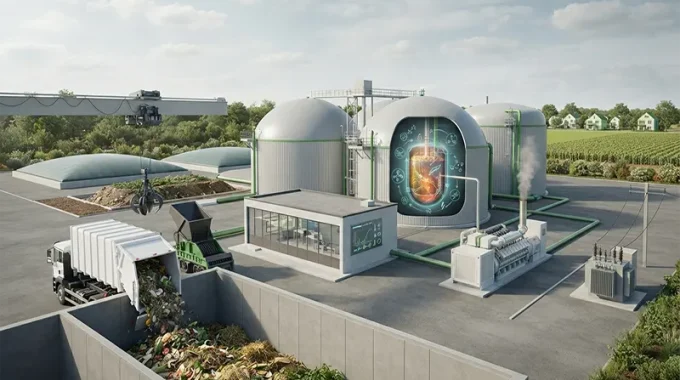
Anaerobic digestion is a biological process where specialized microorganisms break down biodegradable material in the complete absence of oxygen. Modern industrial AD facilities integrate sophisticated mechanical and biochemical systems to maximize efficiency:
1. Pre-Treatment and Feedstock Preparation
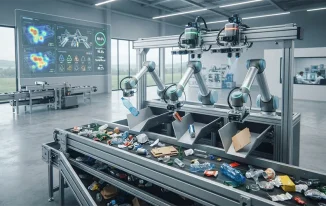
Before organic waste enters the primary reactor, it undergoes rigorous pre-treatment. This involves sorting out inorganic contaminants (such as plastics and metals), macerating solid matter into a uniform slurry, and often thermal pasteurization to eliminate pathogens and weed seeds, ensuring a safe, consistent feedstock.
2. The Four Biochemical Stages of Digestion
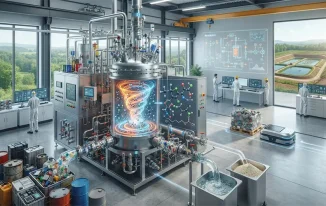
Inside large, heated, and sealed concrete or steel tanks, the organic slurry is subjected to four distinct microbial phases:
- Hydrolysis: Complex polymers (proteins, carbohydrates, fats) are broken down by extracellular enzymes into simpler soluble monomers.
- Acidogenesis: Acid-forming bacteria convert these monomers into volatile fatty acids (VFAs), alcohols, and carbon dioxide.
- Acetogenesis: Acetogenic bacteria transform the VFAs into acetic acid, hydrogen, and carbon dioxide.
- Methanogenesis: Strict anaerobic archaea consume these end products, ultimately synthesizing biogas composed primarily of methane and carbon dioxide.
3. Biogas Upgrading and Cogeneration
The raw biogas generated in the reactor can be channeled directly into Combined Heat and Power (CHP) engines to generate on-site electricity and thermal energy. Alternatively, it can pass through advanced gas-upgrading systems (using pressure swing adsorption or membrane separation) to remove impurities and carbon dioxide, producing pipeline-grade Renewable Natural Gas (RNG).
4. Digestate Processing
What remains after digestion is a nutrient-rich byproduct known as digestate. Mechanical separators divide this material into solid and liquid fractions rich in nitrogen, phosphorus, and potassium, ready to replace synthetic chemical fertilizers in commercial agriculture.
Key Industrial and Municipal Benefits
Integrating large-scale anaerobic digestion systems into municipal or industrial operations yields compounding economic and ecological advantages:
- Reliable Renewable Energy Generation: Unlike intermittent wind or solar power, AD systems operate 24/7, providing steady baseload green electricity or dispatchable RNG that can be injected directly into local gas grids.
- Aggressive Methane Abatement: Diverting wet organic streams away from landfills effectively traps methane at the source, transforming a potent greenhouse gas into a clean energy asset and drastically reducing corporate carbon footprints.
- Circular Nutrient Recovery: AD closes the agricultural loop. By converting waste into pathogen-free, high-nutrient biofertilizer, facilities reduce their reliance on energy-intensive synthetic fertilizers, protecting local waterways from chemical runoff.
Operational Challenges and Facility Design Considerations
Despite their profound benefits, deploying industrial anaerobic digestion plants requires navigating distinct engineering challenges. Facility operators must carefully manage feedstock consistency to prevent biological overloading or foaming within the reactor. Controlling ammonia toxicity and maintaining strict temperature stability are critical for keeping the microbial communities healthy. Furthermore, high initial capital expenditures (CapEx) require careful financial modeling, alongside rigorous odor-control technologies and compliance with local zoning regulations.
Anaerobic digestion systems represent a cornerstone technology for modern municipal and industrial circular economies. By harnessing biological decomposition to convert waste streams into clean energy and valuable nutrients, AD bridges the gap between environmental protection and commercial viability. Investing in advanced anaerobic digestion infrastructure is a vital, future-proof strategy for organizations committed to sustainable resource management and true net-zero operations.